If you’ve ever been to summer camp then you know the joy of cleavers. The memory of the first time someone picked a sprig of velcro plant and stuck it to my shirt is vibrant in my mind. It was the first of many times as a child that a plant excited me. Since then my relationship with plants has steadily grown and I am always amazed by the varied healing effects that one plant can provide.
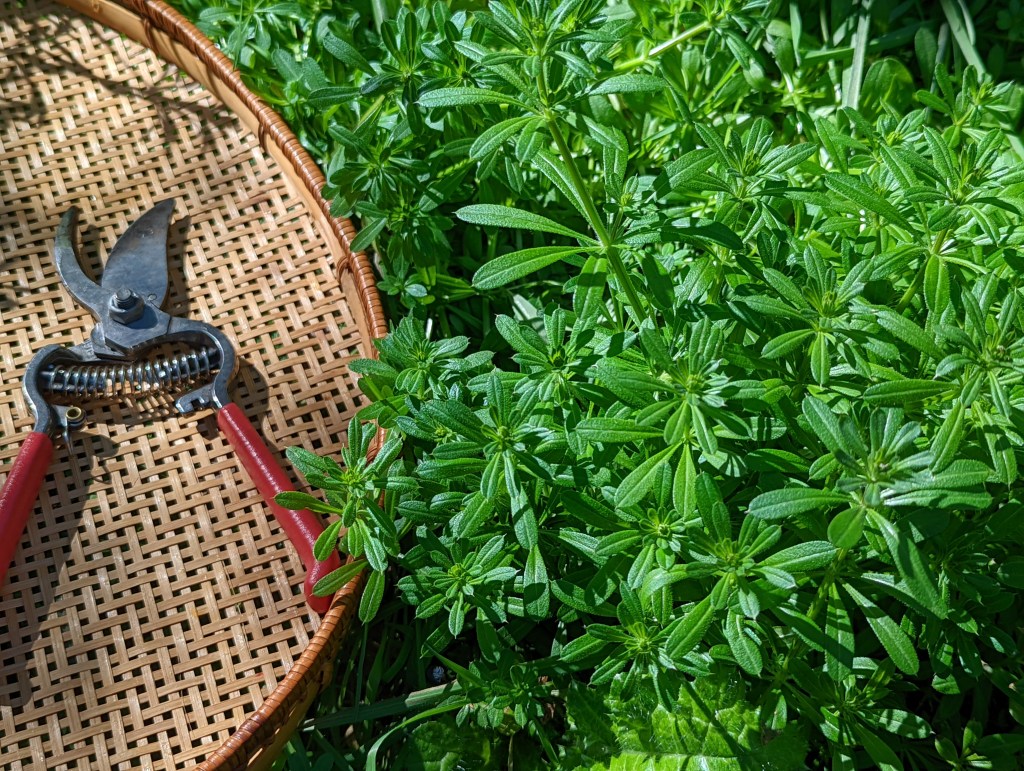
Cleavers (Gallium aparine), also known as grip grass, catchweed, or bedstraw is a common springtime medicinal plant that you most likely have growing in your yard. Cleavers are high in vitamin C and were used historically to prevent scurvy. The Scandinavians used layers of the plants to make a sieve to strain milk. The roots can be used to make a red dye. The common name bedstraw derives from its use as a stuffing for mattresses. It was thought to line the bed of the virgin Mary and the manger of the infant Jesus, for that reason another name for cleavers is “Our Lady’s bedstraw.” We can find some very interesting facts when we look at the historical usages of plants!
If you look in an untrampled corner of your yard, you will very likely find cleavers growing this time of year and that is by nature’s design! Cleavers are key to our spring cleaning-our bodily spring cleaning that is! During the cold winter months we eat heavy foods and we are more sedentary. Cleavers help us clean up internally by working as an eliminative. The body accumulates toxins, especially in the winter time because of inadequate eliminating functions, poor tissue circulation, poor kidney and liver function and poor digestion. Cleavers work through our kidneys to help eliminate this toxic load.
Excess uric acid leads to issues such as gout, arthritis and kidney stones. Skin conditions like eczema and psoriasis can be exacerbated when the kidneys are overburdened with uric acid. Cleavers support the kidney’s elimination of metabolic byproducts like uric acid. A tea of cleavers and other springtime herbs like chickweed, dandelion and nettle can be useful in excreting excess uric acid when used regularly over time.
Cleavers are also diuretic making them useful in treating edema related swelling of the hands, feet, eyelids and breast tissue. It is a cooling lymphatic that reduces swelling in the lymph nodes. Combine with disinfectant herbs to treat swollen lymph glands caused by herpes, cold and flu. Combine with other lymphatic herbs for non-infective swelling or hard lymph nodes. Please use with caution when treating edema as it’s important to find out the root cause of the edema before treating it.
While doing my research for this blog post, I was surprised to learn that cleavers can be used both internally and externally to treat swollen, tender or lumpy breasts. For internal use you can make a tea, express the juice (i.e. succus), make an alcohol (i.e. tincture) or a vinegar (i.e. acetum) extract. Externally you can massage the swollen areas with an oil made with fresh wilted cleavers. I know lots of women who could benefit from the cooling relief of cleavers from time to time. I was also surprised to learn that cleavers can be used as an adjunct to conventional treatment of breast cancer. It can be used both during treatment as well as after! I would be curious to know how many western doctors know about this useful adjunct!
Last but not least, all manner of rashes, bug bites, stings, eczema, dermatitis, cuts, scrapes, and poison oak can be relieved by the cooling juice of fresh cleavers. These skin conditions can be treated topically by applying the succus (expressed juice) to the affected area. The succus is anti-inflammatory and healing. You can easily freeze the succus in ice cube trays to have at the ready anytime you need. Making and using the succus with children would be a wonderful way to get them turned on to the power of cleavers in addition to the fun “velcro” action of the plants!
Watch the video below to learn how to make a cleavers succus.

 Lavender Bergamot Kitchen
Leave a reply to Eileen Marie Humpal Cancel reply